REGISTER
|
|
|
|
|
|
|
|
|
EIGPM1 -74.00% (-0.19)
|
TAEE11 -0.05% (42.30)
|
EIPCA1 112.00% (0.70)
|
IEEX 0.25% (128,641.00)
|
IBXX -0.17% (76,125.00)
|
IGCX -0.18% (27,407.00)
|
TAEE11 -0.05% (42.30)
|

Since the Social pillar is a key component of TAESA's operations, it promotes initiatives focused on the well-being, safety, and development of the people connected to the Company. Its actions include occupational health and safety programs, continuous employee training, strengthening of diversity and inclusion practices, and the development of initiatives that foster dialogue and transparent engagement with communities located near its operations.

The Company also promotes responsible practices throughout its value chain, ensuring safe conditions for employees, service providers, suppliers, and other impacted stakeholders, reaffirming its commitment to social progress and the creation of more equitable and inclusive environments.


People Management

Three of the new material topics have a strong interface with People Management:

  • Health, Safety and Well-Being at Work;
  • People Management, Diversity and Talent Development;
  • Governance, Risks and Compliance.

Recognizing the central role of People Management in organizational performance, TAESA maintains a structured set of initiatives and guidelines focused on the care and development of its teams.

Investing in employee development not only aims to meet the Company's current needs, but also to ensure that the required competencies are available in the future. This ongoing investment results in more capable professionals who are better prepared to achieve the best possible outcomes.

Furthermore, TAESA ensures equal opportunities, respect for diversity, and the possibility for all its employees to build a solid career in an ethical and transparent manner.

Workforce Profile as of 12/31/2025

664
men
203
women
* This figure includes only employees whose contracts are governed by the CLT (Consolidation of Labor Laws) and does not cover suspended employment contracts.

Pay Transparency and Equal Pay Report — In compliance with the Equal Pay Act (No. 14,611) and Decree No. 11,795/2023, we make available the pay transparency reports published by the Ministry of Labor and Employment (MTE). Data obtained via e-Social and the Emprega Brasil Portal.

Talent Attraction

Talent Attraction

TAESA recognizes that its employees are its greatest asset and therefore prioritizes both the development and the personal and professional fulfillment of each team member.

The Company also strongly values internal growth, prioritizing the promotion of its own employees before seeking talent in the market. This approach strengthens human capital, increases talent retention, and broadens opportunities for career progression and development within a diverse, inclusive, and continuous-learning-oriented environment.

Training and Development

Training and Development

Employee development is a relevant aspect of the Company's strategy and an integral part of its management model. Continuous investment in training results in better-prepared professionals capable of delivering the best outcomes for the Company, both today and in the future.

To maintain its position as a benchmark in the transmission market, TAESA constantly seeks best practices in organizational development. Partnerships with leading institutions and consulting firms provide a competitive edge in the qualification and development of professionals, always aligned with internal policies and procedures to reflect the established objectives.

It is the commitment of the People & Culture team to offer the best options for organizational development and to support managers in making that development happen.

Explore some of the Company's initiatives focused on the professional development of its people:

  • Education Incentive Program: The program encourages ongoing learning and supports employee retention by reimbursing 50% of monthly tuition fees for technical, undergraduate, or postgraduate/master's courses for up to five years.
  • Performance Review Cycle: On an annual basis, all employees up to Executive Management level participate in the Performance Review, and TAESA revisits its competency framework to align it with the Company's strategic growth.
  • E-Learning Track: A structured learning track offers personalized content with distinct pathways for Successors/Specialists and Individual Contributors, ensuring development tailored to each audience.
  • Internal Training Programs: Courses or sessions created by employees themselves with the purpose of upskilling their peers, spreading knowledge, best practices, and new processes throughout the organization.
  • Corporate Training Track: The Organizational Development team defines short-duration behavioral training topics based on competencies, Performance Review results, and the needs of each area.
  • Training Needs Assessment (TNA): Training programs defined by the People & Culture team together with managers, based on gaps identified in the Performance Review, aimed at developing TAESA's competencies and values and incorporating market best practices.
  • Career Paths: The project maps growth and internal mobility possibilities by role, making career trajectories more transparent for all employees.
  • Leadership Development Program: The First Leadership Program continued in 2025 with monthly sessions to support new leaders, foster peer exchange, and strengthen leadership competencies.
  • Potential Successors Program: The program develops employees with leadership potential through self-awareness initiatives and capacity-building activities, with participants selected based on performance and readiness.
  • Humanized Retirement Program: The program supports employees nearing retirement with guidance, mentoring, and benefits that ensure a more conscious and welcoming transition.
  • "Desapega" Program: TAESA's job rotation incentive program, focused on leaders and employees formally identified as Successors.
  • Conexão TAESA: The initiative promotes internal sessions presented by employees and broadcast company-wide to share knowledge. In 2025, it covered topics such as Geoprocessing and the ESG Agenda, strengthening integration and the dissemination of strategic subjects.
  • Young Apprentice, Technical Internship, and Undergraduate Internship Programs: In partnership with renowned institutions, TAESA carefully manages its talent pipeline by preparing young people for the job market, developing competencies aligned with the Company and supporting the start of their professional careers.

Diversity and Inclusion

TAESA Diversity Booklet

TAESA treats diversity as a strategic commitment, promoting respect, inclusion, and equal opportunities across all its practices.

The Diversity Program, active since 2021, guides actions across five pillars — People with Disabilities (PwD), 50+ Generation, Ethnicity and Race, Women's Empowerment, and LGBTQIAP+ — through initiatives, affinity groups, training sessions, and educational campaigns. The Company also upholds public commitments such as the Women's Empowerment Principles and the Race and Priority Movement, with representation targets in leadership positions.

Progress in female participation is reinforced by initiatives such as the Female Leadership Mentoring Program and the appointment of Cátia Pereira as CFO — a milestone that strengthens women's presence at the senior leadership level and demonstrates the Company's alignment with its diversity goals.

In addition, affirmative actions, initiatives for the inclusion of people with disabilities and minority groups, intergenerational programs, and mechanisms for the prevention and handling of discrimination reinforce the commitment to a safe, welcoming, and equitable environment. Together, these practices promote development, representativeness, and a culture that values differences.

Learn more through the TAESA Diversity Booklet.

Health and Safety

TAESA seeks to protect everyone involved in its activities by promoting safe and healthy work environments. Worker participation from the conception through to the implementation of initiatives is valued, contributing to improved accuracy in results. The Health and Safety teams continuously strive to enhance this process to make it more efficient and sustainable.

Health, Safety and Well-Being at Work is considered one of the material topics. The Quality of Life Program, Monthly Safety Dialogues, workshops, and a Safety Culture diagnostic are direct results of this commitment. The Company also invests in emergency drills, Emergency Response Plans, and preventive training to ensure the best possible response to any incident or emergency situation.

Another important initiative is the monitoring of corrective actions arising from non-conformities, field inspections, and safety observations that include suggestions for improvement opportunities. The commitment to tracking Frequency and Severity rates helps to direct more focused and effective actions and channels lessons learned with the objective of preventing future occurrences.

Occupational Risk Management (ORM) is structured with essential tools to identify and assess hazards and risks across all activities. This process uses the Hazard and Risk Matrix, the Preliminary Risk Analysis (PRA), the Risk Management Program (RMP), and technical reports, all aligned with legal requirements. The RMPs guide the Occupational Health Medical Control Program (PCMSO), determining the examinations required based on the identified risks.

These tools also direct risk elimination and mitigation actions, mandatory training, engineering solutions and administrative controls, as well as the use of Personal Protective Equipment (PPE).

Another important resource is the Safety Observation application, developed by the Safety team in partnership with IT. Through this tool, any worker — whether an employee or a contractor — can log observations, both positive and improvement-focused, with guaranteed confidentiality. The tracking of occurrences and improvement actions is carried out via a dashboard on TAESA Digital. Internal regulations ensure the right to refuse work when safety conditions are not adequate.

The Company also has an Internal Accident Prevention Commission (CIPA+A), in compliance with Regulatory Standard NR-05, which reinforces preventive actions and is present at the RJ headquarters and at some regional offices. In units where CIPA+A is not mandatory, representatives take on equivalent roles, ensuring alignment with the practices adopted by the other commissions.

TAESA offers its employees a benefits package in line with market best practices, divided into two areas: Medical and Health Services, and Well-Being and Quality of Life. This includes medical and dental assistance as well as access to Conexa Saúde.

The Quality of Life Program promotes the physical and mental health and well-being of employees and their dependents. Its activities include:

  • Workplace Exercise Classes;
  • Shiatsu;
  • Loyalty Program;
  • Maternity, Chronic Conditions, and Orthopedics Program;
  • Vaccination Campaign;
  • Alô TAESA;
  • TAESA em Cores;
  • Among others.

These initiatives aim to promote the health and well-being of employees and their dependents, demonstrating TAESA's commitment to the comprehensive care of its people.

The Occupational Health service monitors examinations through the Occupational Health Certificate (ASO), defined according to the risks and activities of each role, following NR-7 and the PCMSO. The PCMSO is developed based on the risks identified in the RMP, which determine the examinations required for each function. This process covers all operational, maintenance, and other areas of TAESA.

Job analysis begins with the job description, used by the Safety and Health team to identify exposures that will inform mandatory training, the definition of Homogeneous Exposure Groups (HEG), and occupational examinations, taking into account the frequencies required by regulatory standards and internal guidelines.

In the event of accidents, incidents, or near-misses, TAESA carries out immediate reporting and investigation to identify all contributing factors, with the goal of implementing actions to prevent recurrence.

The Company develops projects, actions, and initiatives to improve safety performance, seeking to eliminate occurrences and strengthen a safety culture among employees. Furthermore, TAESA monitors and promotes safe and healthy environments for suppliers, contractors, visitors, and other stakeholders.

Stakeholder Engagement

To strengthen its sustainable performance, TAESA prioritizes transparency and maintains accessible channels so that all stakeholders can communicate with the Company. Below are the main audiences with which TAESA engages and the forms of interaction established.

TAESA is controlled by Companhia Energética de Minas Gerais – CEMIG (CEMIG) and ISA Investimentos e Participações do Brasil S.A. (ISA Investimentos).

TAESA has 63.45% of its shares traded on the market. One of the Company's primary objectives is to maximize value for its shareholders, ensuring long-term business sustainability, the delivery of a high-quality essential service, and compliance with the rules established by Brazilian regulatory authorities.

For investor communications, TAESA uses its Investor Relations website and provides email and telephone (+55 21 2212-6000). The Company holds public meetings with analysts and events such as the General Shareholders' Meeting.

TAESA's customers are users of the National Interconnected System (SIN) Basic Grid, including generators, distributors, and free consumers. These users are identified based on monthly data from the National Electric System Operator (ONS) and on the Facility Sharing Agreements and Transmission Facility Connection Agreements (CCI/CCT).

The relationship is governed by TAESA's Integrated Management System Policy (SGIT), the Code of Ethics and Conduct, and the Grid Procedures. Communication takes place directly between the parties, by email or through the Company's website, which provides billing documents and information for SIN users.

TAESA values the press as an essential channel of transparency and actively engages with journalists, monitoring information and responding promptly to media inquiries.

The Company offers a dedicated section on its website with the official contacts of its Press Office, with the aim of facilitating access to information.

TAESA's supplier management is integrated into the Supply Chain area and prioritizes nationally produced goods and services. The Company works with a broad and diverse supplier base, ranging from small service providers to multinationals under Turn Key contracting arrangements.

Supplier relationships are guided by the Code of Conduct for Business Partners, Suppliers, and Third Parties, grounded in ethics, transparency, and accountability. The Company prioritizes partners that meet criteria related to innovation, safety, quality, and sustainability. The Code also directs the use of the Ethics Channel for anonymous and secure reporting.

The Company applies a Criticality Matrix to classify suppliers and conducts annual performance evaluations assessing social, environmental, safety, and governance criteria.

TAESA has a structured evaluation process covering aspects such as environmental impact, safety, quality in contract management, and adherence to diversity and sustainability practices. The results of this evaluation generate metrics and scores used to inform decisions and improvements in contracts and processes.

TAESA maintains a structured and transparent relationship with its employees, unions, and public labor bodies. At the end of 2025, the Company had 867 employees, all covered by the collective agreement signed with the representative unions (Sintraindistal, Sinergia, and Steet). The renewed agreement, effective from 06/01/2025, runs through 05/31/2027. This agreement covers a wide range of topics, ensuring compliance with legal standards and internal Human Rights, Ethics, and Compliance guidelines.

Communication with employees is supported by multiple channels, including corporate WhatsApp, emails, the intranet (TAESA Digital), team meetings, and management meetings, as well as digital notice boards and regular newsletters. These channels ensure smooth handling of requests of various natures.

Engagement with unions takes place via email, website, and correspondence, with priority given to the negotiation and monitoring of collective agreements. Interaction with public bodies — such as the Federal Revenue Service, the Secretariat of Labor, and Social Security — is conducted through official systems such as eSocial, e-CAC, Social Security and Caixa websites, correspondence, and email, ensuring the Company's compliance with its labor, social security, and tax obligations.

TAESA engages with social and environmental organizations from the planning phase of its projects. During the licensing process, specific studies are conducted to map and involve these organizations, ensuring socioenvironmental compliance and alignment with regulatory requirements.

The public authorities with which TAESA engages most frequently include: the National Electric Energy Agency (ANEEL), the Ministry of Mines and Energy (MME), the Brazilian Institute of Environment and Renewable Natural Resources (IBAMA), state and municipal environmental agencies, the National Electric System Operator (ONS), among others.

TAESA maintains frequent engagement with communities and landowners from the early stages of project planning. Environmental and land studies identify the areas and surrounding communities.

The main topics addressed include land regularization, compensation, safe coexistence with transmission lines, and rights-of-way usage authorizations. The impacts of construction and operation, mitigation measures, responsibilities, and communication channels are also discussed.

TAESA's institutional website gathers information about its projects and provides official contact channels, including a form, phone numbers, and a public service hotline available at 0800 701 6682, for questions and requests.

Local Development

TAESA understands that its success depends not only on economic and operational performance, but also on promoting social development, quality of life, and respect for human rights in the regions where it operates. The Company seeks to build a fair and sustainable environment grounded in well-being, opportunity, income improvement, health, education, and the guarantee of fundamental freedoms. This approach is aligned with the Material Topics related to Community Impact and Engagement, and Governance, Risk and Compliance.

Programs such as the Environmental Education Program (PEA) and the Social Communication Program (PCS) reinforce this relationship by promoting capacity-building activities such as fire prevention training, environmental conservation actions, and guidance on safe coexistence with transmission structures.

TAESA also maintains a permanent focus on social responsibility projects, supporting cultural, sports, educational, and health initiatives. Partnerships with local organizations strengthen the socioeconomic development of communities and encourage the hiring of regional labor and suppliers.

Social Responsibility Projects

The implementation of educational and cultural projects in communities near the Company's operations strengthens local well-being and generates shared value, benefiting employees, shareholders, and society as a whole.

The incentive-law projects listed below, even though the financial contributions were made in prior years, commenced activities in 2025:

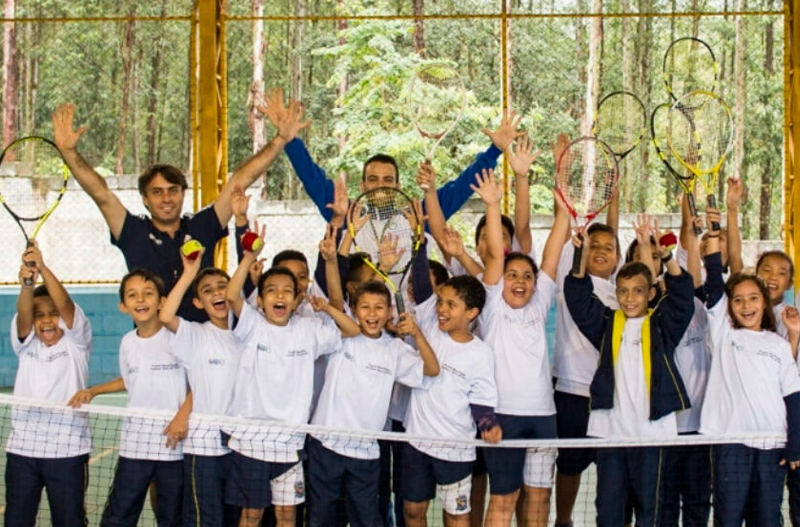
  • Educ Esporte: The Educ Esporte Project, supported by TAESA, offered sports classes and socio-educational activities to 100 children in Assis (SP), promoting inclusion, development, and values such as discipline, self-esteem, and teamwork.
  • Trampolim Project: TAESA supported the Trampolim Project, which promotes the social and professional inclusion of vulnerable youth and young people under socio-educational measures in Belo Horizonte. The project provides guidance and coordination with the protection network to extend participation in apprenticeship programs and facilitate the entry of these young people into the formal labor market, with support from FMDCA, CMDCA, and the local government.
  • Agricultores Idosos do Moxotó Project: TAESA also supported, through the Incentive Law, the Agricultores Idosos do Moxotó Project, which promotes active aging among family farmers aged 60 and over in four municipalities in the Sertão region of Pernambuco. The initiative strengthens productive home gardens, valorizes traditional knowledge, and addresses challenges such as social isolation, low income, and limited access to services, through training, technical support, and encouragement of sustainable production.
  • Culture and Inclusion for Social Development: The "Enquanto a Linha Toca" Project, supported by TAESA through the Cultural Incentive Law, offered free workshops in music, theater, dance, sewing, and crafts in Santa Maria (RS), benefiting 167 participants over nine months. The project concluded with an artistic performance and a creative fair showcasing products made during the workshops.
Project Theme Amount Invested Timeline
Educ Esporte Sports classes for children and adolescents: soccer, volleyball, and judo, in Assis (SP). R$ 190,790.66 amount paid in 2023 Started in January and concluded in December 2025.
Enquanto a Linha Toca Music project for children, adolescents, and their mothers, in Santa Maria (RS). R$ 272,380.16 amount paid in 2023 Started in March 2025, with expected completion in January 2026.
Agricultores Idosos de Moxotó Project for the development of productive home gardens by elderly family farmers in Moxotó, in the Sertão region of Pernambuco. R$ 386,096.14 amount paid in 2021
R$ 202,500.00 amount paid in 2022
Started in June 2025, with expected completion in 2026.
Trampolim The project aims to strengthen the engagement and retention of young people in the labor market, expanding their opportunities for training, employability, and social protagonism. R$ 63,000.00 amount paid in 2018 Started in October 2025, with expected completion in July 2026.
The incentive-law projects received financial contributions in prior years but only commenced activities in 2025.

Learn More